Building while the foundation cures.
How a modular tower goes up in roughly 42 weeks where a conventional one needs roughly 84. And where that gain stops.
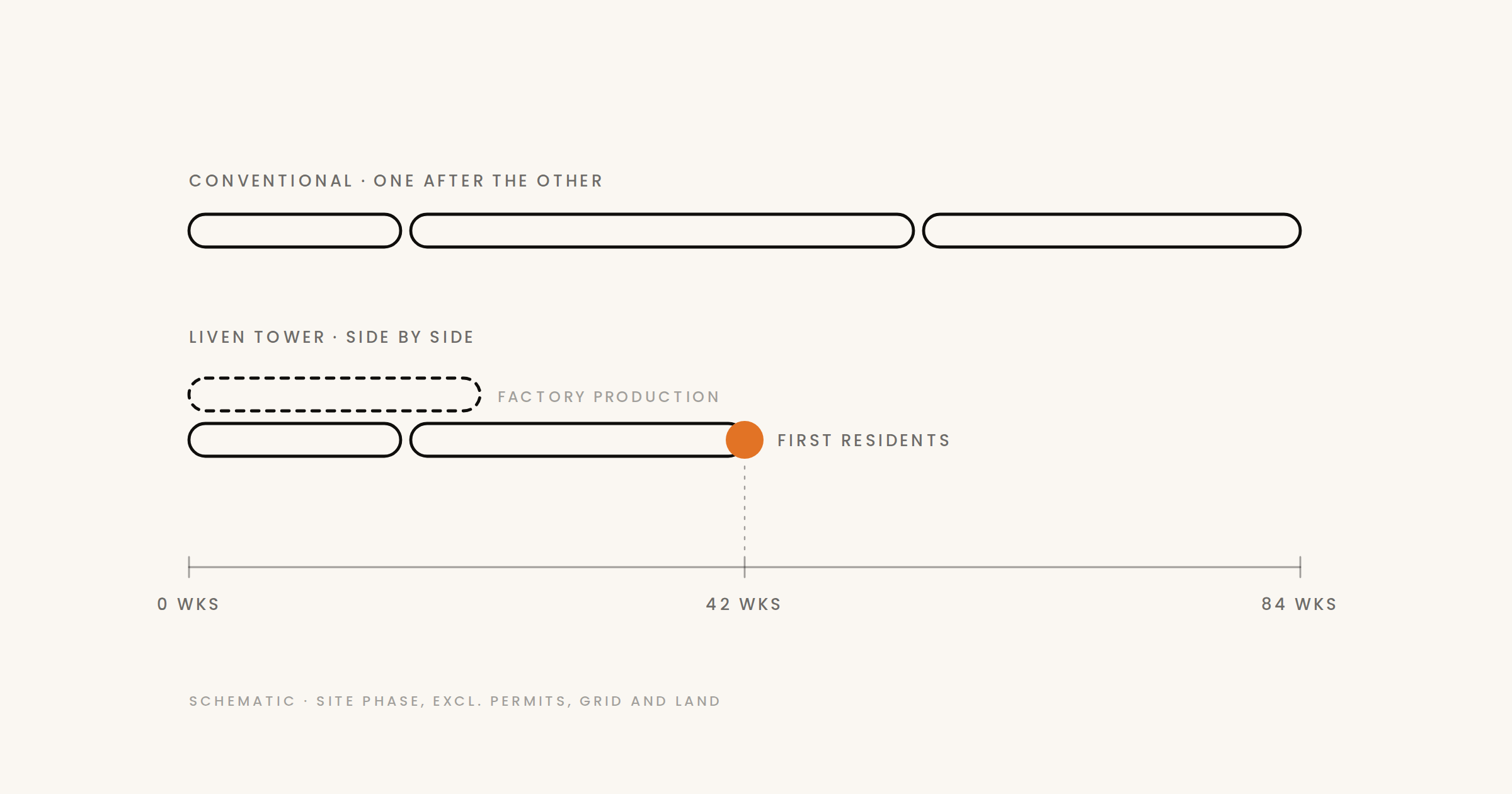
A conventional residential tower is conceived on the plot and built on the plot. First the foundation. Then the structure, floor by floor. Then the facade, the services, the fit-out. Every step waits for the one before.
A Liven Tower is built differently. Not faster at the same thing, but in a different order.
01The home is made in a factory
The homes are produced as complete modules by VDL De Meeuw. Consistent quality, consistent dimensions, and everything can be checked before anything arrives on site.
That matters more than it sounds. On a building site, you often find a mistake only once it is fixed in place. In a factory, you catch it before the module leaves the hall.
02Two tracks side by side
While the factory produces, the plot is prepared and the foundation is laid. The two tracks run at the same time instead of one after the other. That is where the time is won.
In a conventional tower, work on the homes can only start once the foundation is finished. With ours, the first homes can be ready by the time the foundation is.
03Stacking instead of building
On site, the building is assembled rather than constructed. Modules are stacked and connected. That means less construction traffic, less disruption for the street and a shorter period in which the neighbourhood lives next to a building site.
It is not a trick. It is a different order.
What it delivers
For Randstad 21 in Almere we work with a construction time of roughly 42 weeks, against roughly 84 weeks for a comparable conventional tower. About half. Development and construction costs come out roughly 20 percent lower. These figures are indicative and based on this first project.
For a municipality, that means earlier completion per plot. For a housing association, predictable quality. For an investor, earlier income. And for the people who will live there, a home sooner.
Where the gain stops
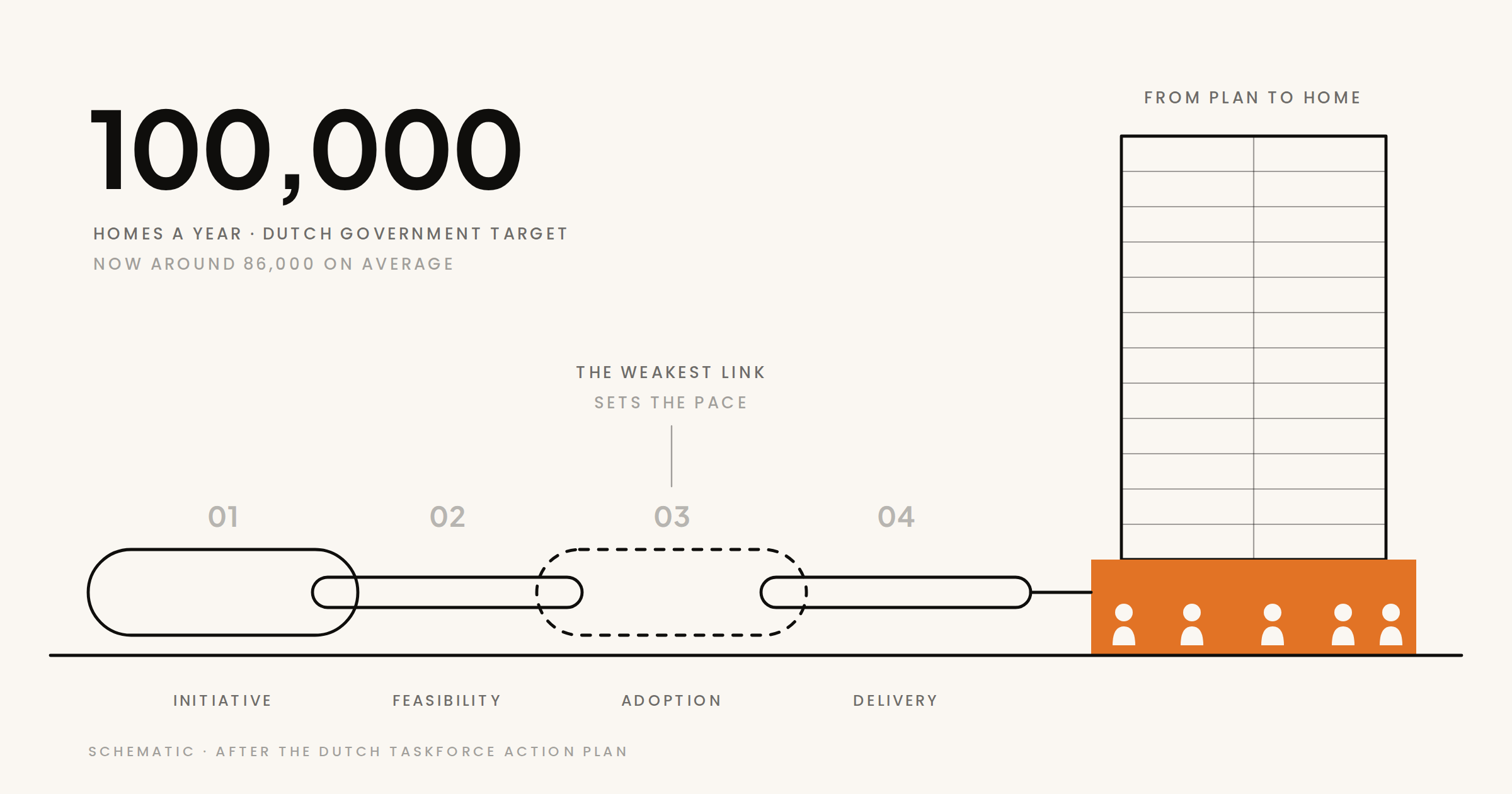
We are clear about where a factory does not help. Permits, grid connection and land remain the critical path, and in the Netherlands that path runs through the municipality. A module can be ready in the factory, but it cannot be connected any sooner than the power grid allows.
We accelerate the part we control. For the rest, we work with the municipality as early as we can.
What the factory does not make
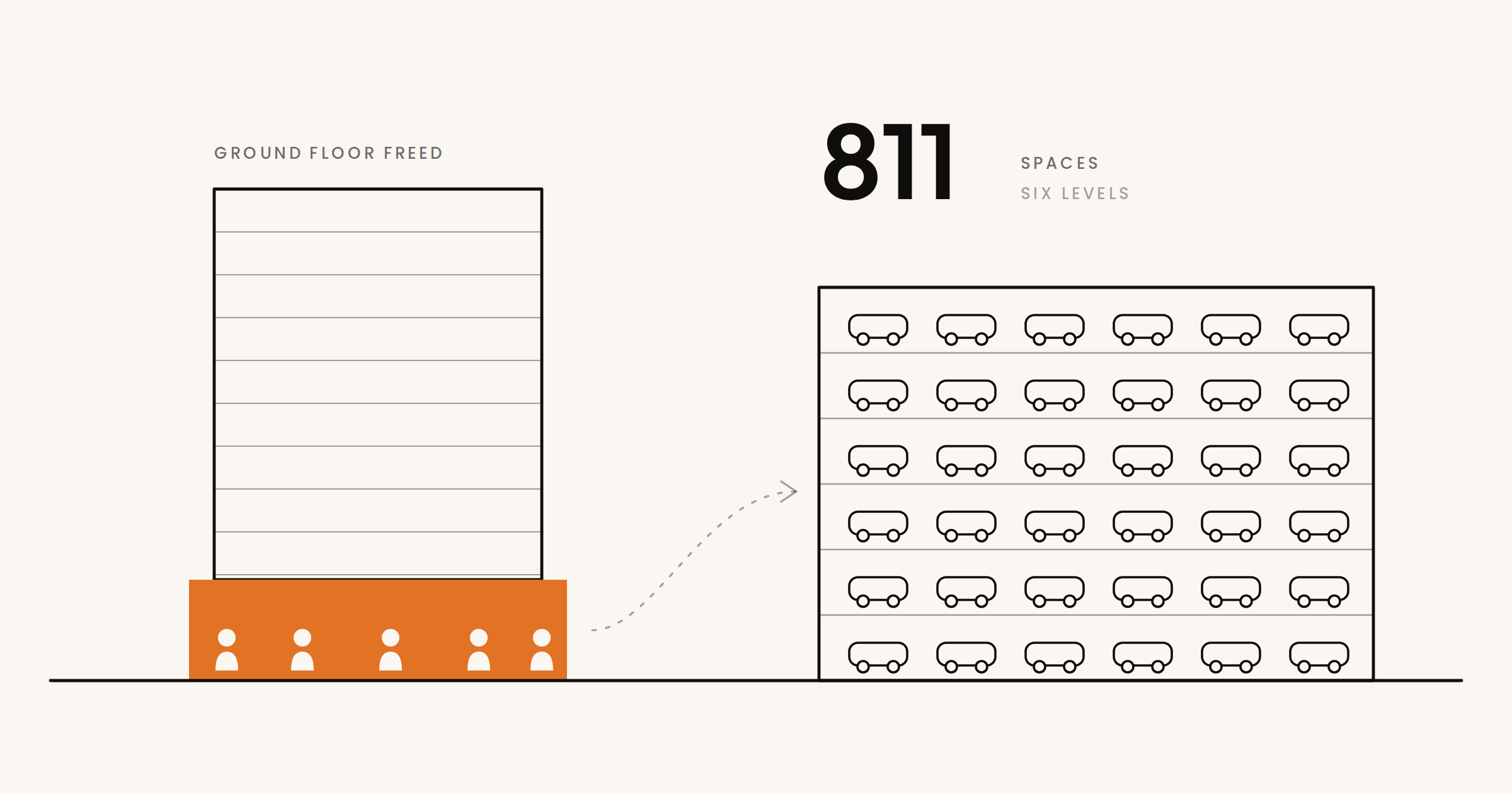
There is one layer we do not take from the factory: the ground floor. It does not get a standard lobby, but a plinth that fits the place, with care, community, mobility and technology. Building fast is the means. A neighbourhood where people meet is the goal.